
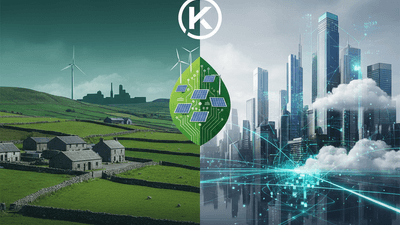



In the landscape of Irish engineering, few metrics carry as much weight as carbon reduction in the built environment. As the sector grapples with stringent EU regulations and a profound shift in corporate responsibility, the latest figures from Cavan-headquartered giant Kingspan serve as both a benchmark and a bellwether. The global building materials leader has announced a staggering reduction of 2.8 million tonnes of emissions since 2020, a milestone that underscores the immense scale of change occurring within industrial engineering and construction.
However, the narrative of Irish engineering in this quarter is not solely defined by decarbonisation. From significant M&A activity in Northern Ireland to cutting-edge "Physical Intelligence" developments in the electronics sector, the industry is demonstrating remarkable agility. This report delves into the practical implications of these developments for engineering professionals across the island.
Sustainability is no longer a peripheral CSR goal but a core operational metric, as evidenced by Kingspan's multi-million tonne carbon reduction. Simultaneously, the Irish engineering landscape is seeing robust growth in consultancy services and high-tech R&D, indicating a healthy, diversified sector.
The Decarbonisation Imperative: Kingspan's 2.8m Tonne Milestone
For decades, Kingspan has been a dominant force in high-performance insulation and building envelopes. Their recent announcement regarding the reduction of 2.8 million tonnes of CO2 equivalent since 2020 is not merely a press release victory; it is a signal to the wider engineering community about the viability of aggressive sustainability targets.
This achievement is likely rooted in a dual-pronged approach relevant to all manufacturing engineers: operational efficiency (Scope 1 and 2) and product lifecycle management (Scope 3). By focusing on embodied carbon—the emissions associated with material extraction and manufacturing—Kingspan is addressing the construction industry's most stubborn challenge.
"Kingspan has achieved a significant milestone by reducing 2.8 million tonnes of emissions since 2020, demonstrating its commitment to sustainability within the engineering and construction materials sector."
Implications for Civil and Structural Engineers
For practicing engineers, this development reinforces the necessity of specifying low-carbon materials early in the design phase. The availability of materials with proven, reduced carbon footprints allows structural engineers to meet increasingly tight NZEB (Nearly Zero Energy Building) standards and LEED certifications without compromising on thermal performance.
Beyond Carbon: Biodiversity in the Supply Chain
While carbon capture dominates the headlines, the engineering supply chain is also waking up to the biodiversity crisis. A prime example of this holistic approach is the new partnership between Wienerberger UK & Ireland and Chester Zoo.
Wienerberger, a major provider of wall, roof, and landscaping innovations, has launched this initiative to protect vital UK species. For environmental engineers and planners, this signals a shift toward Biodiversity Net Gain (BNG) strategies. It is no longer sufficient to simply mitigate damage; engineering projects and their suppliers are now expected to actively contribute to ecosystem restoration.
- Corporate Social Responsibility (CSR): Moving from passive compliance to active conservation.
- Material Sourcing: Ensuring that the extraction of clay and raw materials is balanced by habitat restoration.
- Regulatory Alignment: Pre-empting stricter environmental planning laws expected across the UK and Ireland.
Consultancy Growth: Northern Ireland's Strategic Expansion
Moving from materials to professional services, the engineering consultancy market in Northern Ireland is witnessing a period of consolidation and rapid growth. AM Consulting Engineers has successfully doubled its workforce following a strategic acquisition in the UK.
This expansion is indicative of a broader trend where Irish and Northern Irish firms are exporting their expertise across the Irish Sea. For engineering talent, this creates a dynamic job market with increased opportunities for cross-border collaboration and large-scale infrastructure projects.
The Drivers of Consultancy Growth
The success of firms like AM Consulting suggests that despite economic headwinds, demand remains high for:
- Infrastructure Modernisation: Upgrading aging utilities and transport networks.
- Energy Transition Projects: Grid upgrades and renewable energy integration.
- Retrofitting Expertise: Applying modern engineering standards to existing assets.
Innovation at the Edge: Analog Devices and Physical Intelligence
Ireland's reputation as a hub for high-tech engineering is further cemented by recent showcases from Analog Devices (ADI). With a massive footprint in Limerick, ADI's presence at Embedded World 2026 highlighted advancements in "Physical Intelligence."
Physical Intelligence refers to the convergence of advanced sensing, processing, and connectivity at the "edge"—allowing machines to interact more intelligently with the physical world. For electronic and software engineers, this represents the frontier of Industrial IoT (IIoT).
| Sector | Key Innovation/Trend | Engineering Discipline Impacted |
|---|---|---|
| Construction Materials | Embodied Carbon Reduction | Civil, Structural, Environmental |
| Electronics | Physical Intelligence / Edge Computing | Electronic, Software, Systems |
| Consultancy | Strategic M&A / Workforce Expansion | Project Management, Civil, M&E |
| Process Industry | High Shear Mixing Efficiency | Chemical, Process, Manufacturing |
Process Engineering Spotlight: Efficiency in Manufacturing
While high-level strategy dominates the news, the day-to-day reality of engineering often lies in process optimisation. Recent technical insights into efficiently mixing artificial sweeteners using high shear mixers highlight the granular level of detail required in the food and pharma sectors—both pillars of the Irish economy.
Mixing artificial sweeteners presents unique rheological challenges due to varying particle sizes and solubility issues. The shift toward high shear mixers allows for:
- Reduced Batch Times: Increasing throughput for manufacturing plants.
- Uniformity: Ensuring consistent product quality, critical for regulatory compliance in food and pharma.
- Energy Savings: More efficient mixing cycles translate to lower energy consumption per unit produced.
This technical nuance serves as a reminder that "sustainability" is not just about solar panels; it is often found in the optimization of mixing blades and motor speeds on the factory floor.
Conclusion: A Multi-Faceted Future
The current trajectory of the engineering sector in Ireland and the UK is defined by a convergence of values. Kingspan's emissions reduction demonstrates that heavy industry can pivot effectively toward sustainability. Simultaneously, the expansion of AM Consulting and the R&D leadership of Analog Devices show that commercial growth and technological innovation are accelerating alongside these environmental goals.
For the Irish engineering professional, the message is clear: the silo between "green engineering" and "core engineering" has dissolved. Whether optimizing a mixing process, designing a sensor for the intelligent edge, or specifying insulation for a commercial build, the modern engineer must now be a master of efficiency, ecology, and economics combined.