
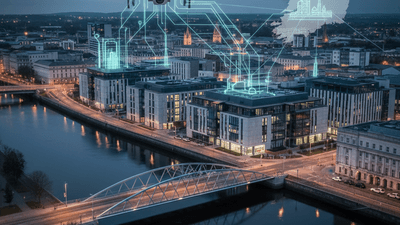



For years, discussions surrounding Ireland's industrial and technological supremacy have been heavily weighted toward the capital. However, a seismic shift is underway across the regions. A newly published report, The Engineering Economy and Place – Ireland, has officially designated Limerick City as an "Engineering Powerhouse," revealing a staggering 44% increase in national engineering employment between 2011 and 2022. This decentralization of talent and capital is not just an economic victory for the Mid-West; it is a clear indicator of how the modern Irish engineering sector is evolving to meet global demands.
The Shifting Center of Gravity: Limerick's Rise
The identification of Limerick as a central node in Ireland's engineering ecosystem is no accident. It is the result of strategic investments in academia-industry partnerships, a robust manufacturing base, and a concerted effort to attract foreign direct investment (FDI) outside of the Greater Dublin Area. The 44% growth in engineering employment nationwide underscores a broader trend: engineering is no longer just an auxiliary support function; it is the core engine of the Irish economy.
This regional boom creates a ripple effect. As hubs like Limerick expand, they require sophisticated infrastructure, sustainable energy grids, and a highly specialized workforce. For engineering professionals, this means career opportunities are becoming more geographically diverse and technically demanding.
Future-Proofing the Talent Pipeline
With rapid expansion comes the pressing challenge of skills shortages. The tools of the trade are changing, and the Irish workforce must adapt. Recognizing this, Skillnet Ireland recently launched its ambitious three-year strategy, Empowering Enterprise 2026-2028, A Strategy for Next Generation Capability.
Embracing AI and Digitalization
The new Skillnet strategy is explicitly designed to strengthen Ireland's competitiveness by focusing heavily on digitalization, artificial intelligence (AI), and sustainability. For engineers, this is a clear signal. The days of siloed, purely mechanical or civil disciplines are fading. Today’s projects require a multi-disciplinary approach where data analytics and AI-driven predictive maintenance are just as critical as structural integrity.
"The integration of AI into traditional engineering workflows is no longer a futuristic concept; it is a present-day requirement for maintaining global competitiveness."
Powering the Hubs: Green Infrastructure and Design
As regional hubs like Limerick expand their manufacturing and data center footprints, the demand on the national grid intensifies. Meeting this demand sustainably is arguably the greatest engineering challenge of our generation. Fortunately, Ireland's renewable energy sector is showing it is up to the task.
In February, the country reached a significant milestone when nearly half of Ireland's electricity was generated from renewable sources. Wind energy alone contributed 41%, setting a new record peak of 3,898 MW. For electrical and grid engineers, this transition from fossil fuels to intermittent renewable sources requires immense innovation in grid stability, battery storage, and smart distribution networks.
But the modern Irish engineering landscape isn't just about utility; it's also about integration with the environment and communities. This holistic approach is beautifully exemplified in the built environment. A recent exploration of seven remarkable bridges highlighted how contemporary infrastructure can seamlessly blend engineering mastery with artistic design, enhancing rather than disrupting their local surroundings. It is a reminder that as we build these regional powerhouses, aesthetic and community impact must remain central to engineering design.
Actionable Steps for Engineering Professionals
How can individual engineers position themselves to thrive in this booming, decentralized, and highly technical landscape? The answer lies in continuous professional development and formal recognition of competencies.
To support this, Engineers Ireland is currently running a highly recommended Professional Titles webinar series. Achieving a registered professional title is one of the most effective ways to validate your expertise in an increasingly competitive market.
Key Professional Titles and Deadlines
| Professional Title | Target Audience | Next Application Deadline |
|---|---|---|
| Chartered Engineer (CEng) | Experienced professionals demonstrating leadership, complex problem-solving, and innovation. | June 26, 2026 |
| Associate Engineer (AEng) | Professionals applying engineering principles to practical scenarios and systems. | June 26, 2026 |
| Engineering Technician (EngTech) | Specialists in technical applications, design, and equipment operation. | June 26, 2026 |
For those looking to elevate their careers, attending these webinars and preparing applications ahead of the June 2026 deadline should be a priority. Formal accreditation not only boosts earning potential but is increasingly required for lead roles in major public and private infrastructure projects.
Convergence at the RDS
To truly grasp the scale of this regional and national growth, professionals need to connect with the wider industry. Premier Publishing and Events has confirmed that the National Manufacturing and Supply Chain Conference and Exhibition will take place on May 27-28, 2026, at the RDS in Dublin.
This event will serve as a critical nexus for the trends we are seeing today. Attendees can expect to see:
- Regional Showcases: Innovations emerging from hubs like Limerick and Cork.
- Green Tech: Practical applications of the renewable energy technologies that drove February's wind power records.
- AI Integration: Demonstrations of the digital tools highlighted in Skillnet’s 2026-2028 capability strategy.
Looking Ahead
The narrative of Irish engineering is expanding. Limerick’s crowning as an "Engineering Powerhouse" is not an isolated event; it is a symptom of a healthy, growing, and diversifying national sector. With a 44% increase in employment, a commitment to green energy, and a strategic focus on next-generation skills like AI, the foundation is set for sustained success. For the Irish engineering professional, the mandate is clear: embrace regional opportunities, upskill relentlessly, and pursue the professional accreditations that will mark you as a leader in this new era of innovation.