
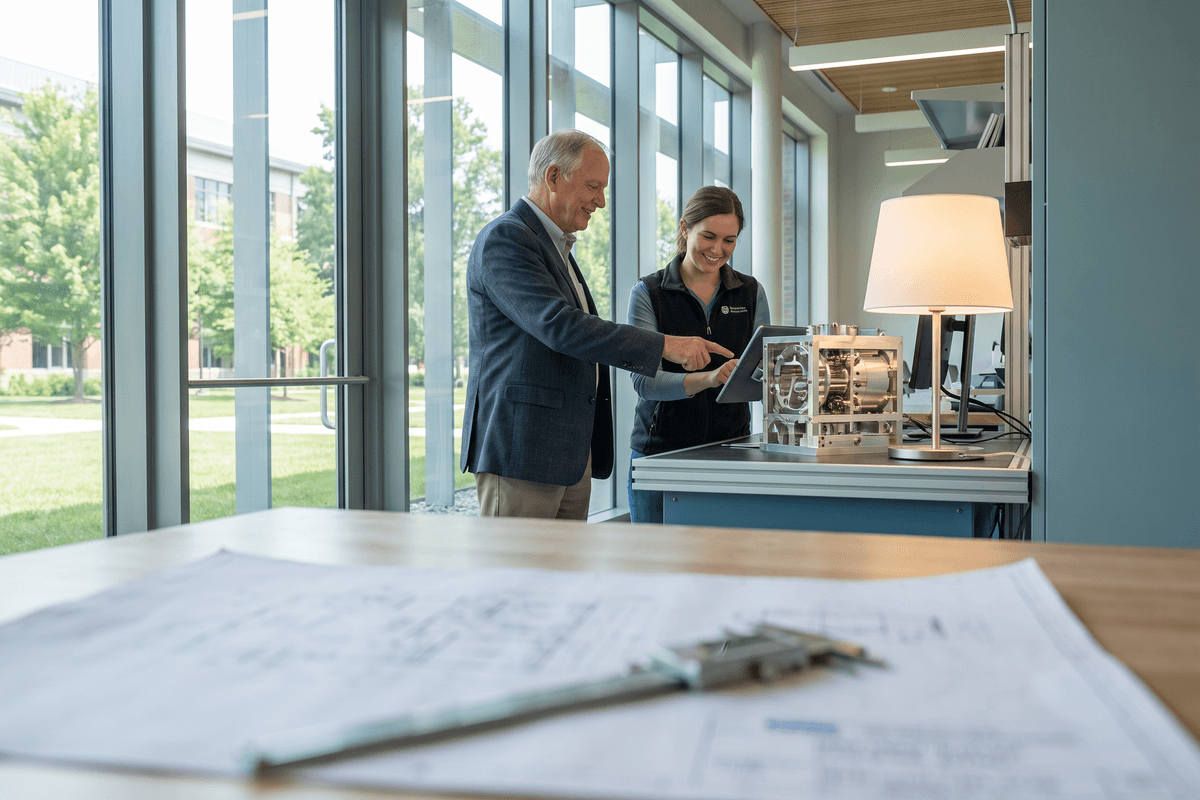



In 2026, the greatest bottleneck in European engineering isn't capital, supply chains, or regulatory red tape—it is human capacity. As Ireland’s engineering sector continues to punch above its weight on the international stage, the strategies companies use to acquire, retain, and deploy talent are undergoing a radical transformation. We are witnessing a decisive shift from transient, project-based models to long-term capacity building.
This week’s industry movements perfectly encapsulate this evolution. From aggressive direct hiring expansions and high-profile global acquisitions to exploratory missions into the next frontier of global power generation, the Irish engineering landscape is aggressively securing its foundations while simultaneously looking over the horizon.
Securing the Base: The Strategic Pivot to Direct Hiring
For decades, the standard operating procedure for scaling engineering and construction projects relied heavily on complex webs of sub-contractors and agency personnel. However, as project complexity increases and the war for specialized talent intensifies, major players are rethinking this approach.
This week, international engineering and construction firm Dornan announced a significant expansion of its direct hiring initiatives. Designed to support a growing portfolio of complex projects across Ireland and Europe, this move signals a broader industry realization: institutional knowledge and workforce reliability are now primary competitive advantages.
"The shift toward direct hiring is no longer just an HR strategy; it is a critical risk mitigation tactic. By bringing talent in-house, firms can better control project delivery, foster a unified safety culture, and insulate themselves from the volatility of the sub-contractor market."
For engineering professionals, Dornan’s strategy represents a welcome stabilization in the market. Direct employment offers clearer career progression, continuous professional development, and the opportunity to build deep expertise within a single corporate ecosystem. It also forces competitors to enhance their own employee value propositions, driving up standards, benefits, and working conditions across the sector.
Global Capital, Regional Roots: The TOBIN Acquisition
While organic growth through direct hiring is one path to capacity, acquisition is the other. The globalization of Ireland's engineering expertise took another major step forward with the announcement that global engineering consultancy AtkinsRéalis has completed its acquisition of TOBIN, a premier engineering and project management firm headquartered in Galway.
This acquisition is highly strategic for several reasons:
- Regional Penetration: TOBIN’s strong presence in the West of Ireland provides AtkinsRéalis with a deeper regional footprint, crucial for executing national infrastructure and environmental projects beyond the Greater Dublin Area.
- Specialized Expertise: TOBIN brings decades of specialized experience in water, environmental, and structural engineering—sectors that are currently seeing massive capital influxes due to climate adaptation and sustainability mandates.
- Talent Consolidation: In a tight labor market, acquiring an established firm with a cohesive, high-performing team is often more efficient than attempting to recruit hundreds of engineers individually.
The Next Frontier: Fusion Energy and Future Skills
While firms are securing talent for today’s infrastructure and commercial projects, the industry’s leadership is already scouting the skills required for the next decade. Nowhere is this more evident than in the energy sector.
Recently, a delegation from Engineers Ireland visited the UK Atomic Energy Authority to examine growing opportunities in the rapidly developing field of fusion energy. Long considered the "holy grail" of clean power, fusion is slowly moving from theoretical physics into the realm of applied engineering.
Preparing for the Fusion Economy
Ireland may not currently possess a domestic nuclear industry, but our engineering workforce is uniquely positioned to contribute to the global fusion supply chain. The skills required to build and maintain fusion reactors overlap significantly with Ireland's existing strengths:
- Advanced Manufacturing & Materials: The extreme conditions of fusion require novel materials and precision engineering, areas where Ireland's medical device and aerospace manufacturing sectors already excel.
- Complex Project Management: Building a fusion plant is comparable in complexity to constructing advanced semiconductor fabrication plants or hyper-scale data centers—sectors where Irish engineers are considered global leaders.
- Thermal and Systems Engineering: Managing the immense heat and complex fluid dynamics of a fusion reactor will require top-tier mechanical and chemical engineering talent.
By engaging with international fusion authorities now, Engineers Ireland is ensuring that domestic professionals are positioned at the vanguard of a multi-trillion-euro future industry, rather than playing catch-up a decade from now.
Strategic Implications for Engineering Professionals
These three developments—direct hiring, global M&A, and the exploration of fusion energy—paint a clear picture of where the Irish engineering sector is heading. To navigate this landscape, professionals should understand how these macro trends translate into career strategies.
| Industry Trend | Impact on the Sector | Actionable Strategy for Professionals |
|---|---|---|
| Shift to Direct Hiring (e.g., Dornan) | Reduced reliance on sub-contractors; focus on long-term retention and corporate culture. | Seek employers offering structured career pathways and continuous learning, rather than just the highest daily contract rate. |
| Global M&A Activity (e.g., AtkinsRéalis/TOBIN) | Integration of local firms into global networks; standardization of processes. | Develop cross-cultural communication skills and familiarize yourself with global project management frameworks (e.g., FIDIC). |
| Next-Gen Energy (e.g., Fusion exploration) | Emergence of entirely new engineering disciplines and supply chains. | Identify adjacent skills in your current discipline (e.g., thermal management, advanced materials) that can pivot toward deep-tech energy solutions. |
Conclusion: A Maturing Ecosystem
The Irish engineering sector of 2026 is maturing rapidly. The moves by Dornan and AtkinsRéalis demonstrate an industry deeply focused on securing the operational capacity needed to deliver on a massive pipeline of European infrastructure. Simultaneously, the foresight shown by Engineers Ireland proves that the sector is not resting on its laurels, but actively seeking its place in the high-value, deep-tech future of global energy.
For engineering professionals in Ireland, the message is clear: the demand for your skills has never been higher, but the nature of how you will be employed, who you will work for, and what you will build is evolving. Those who align their careers with these trends—valuing stability, embracing global integration, and upskilling for tomorrow's technologies—will find themselves leading the charge in Europe's next great engineering era.