
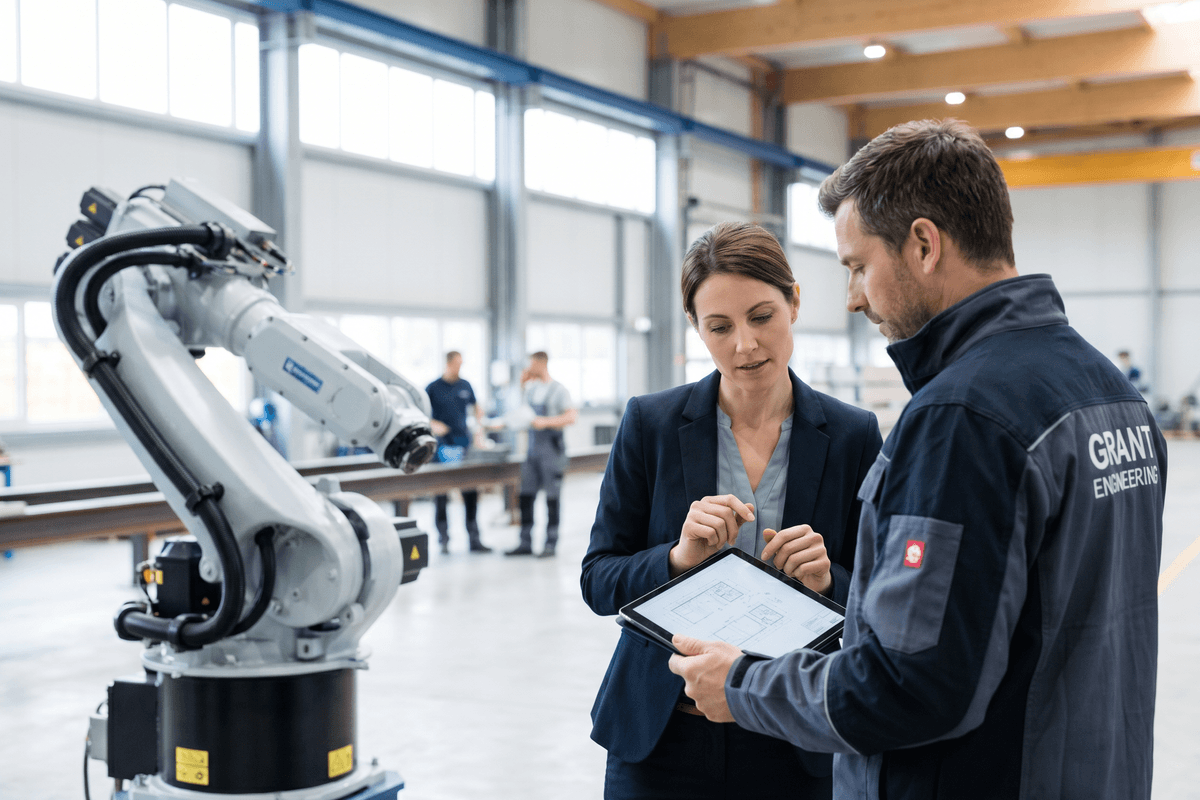



In the evolving landscape of Irish engineering, the most significant shifts often happen not in boardrooms, but on the factory floor. As the global push for decarbonization accelerates, domestic manufacturers are being forced to adapt, innovate, and scale at an unprecedented pace. The recent announcement that heating technology specialist Grant is injecting €8 million into its Irish manufacturing capabilities is a prime example of this transition. But this investment does not exist in a vacuum. When viewed alongside sweeping regional investments in digital infrastructure and a strategic change in leadership at Engineers Ireland, a clear picture emerges: the Irish engineering sector is simultaneously scaling up its physical manufacturing and smartening up its digital capabilities.
The €8 Million Catalyst: Grant’s Next-Generation Vision
The transition to sustainable energy is fundamentally rewriting the rules of thermal engineering. Heat pumps and renewable heating systems require highly efficient, specialized components to function optimally. Recognizing this bottleneck, Grant has announced an €8 million investment to expand its manufacturing capabilities and develop a next-generation cylinder range right here in Ireland.
For engineering professionals, this is more than just a corporate expansion; it is a vital indicator of where indigenous manufacturing is heading. The production of next-generation hot water cylinders—crucial companions to modern heat pump systems—requires advanced fabrication techniques, automated welding, and rigorous thermal testing protocols. By keeping this manufacturing domestic, Grant is not only securing local supply chains but also creating high-value engineering roles in process optimization, automation, and quality assurance.
"Capital expenditures of this scale by indigenous firms demonstrate a robust confidence in Ireland's ability to not just assemble, but to innovate and manufacture the core hardware of the green transition."
This expansion underscores a broader trend: the reshoring and localization of critical green technology components. As supply chain vulnerabilities continue to plague the global market, building domestic capacity for essential infrastructure like high-efficiency cylinders is a strategic imperative. For the Irish mechanical and manufacturing engineer, it means the center of gravity is shifting from pure design toward integrated, end-to-end production.
Regional Shifts: The Push for Technological Sovereignty
While Ireland strengthens its hardware manufacturing, neighboring jurisdictions are making massive plays in the digital realm that will inevitably impact how Irish factories operate. Britain recently unveiled a £1.1 billion strategy to build a supercomputer and boost domestic microchip capacity. This push for "technological sovereignty" is a direct response to the global AI boom and the semiconductor shortages of recent years.
Why does a UK supercomputer matter to an Irish manufacturing engineer? Because the future of facilities like Grant’s expanded plant relies entirely on Industry 4.0 technologies—technologies powered by advanced chips and high-performance computing. From digital twins that simulate thermodynamic flows in next-gen cylinders, to AI-driven predictive maintenance on the factory floor, physical manufacturing is becoming inextricably linked to computational power.
As the UK and Europe invest heavily in semiconductor capacity and supercomputing, Ireland’s engineering sector must position itself to leverage this regional digital infrastructure. The modern Irish engineer must be bilingual, fluent in both the physical properties of materials and the digital systems that govern their production.
A New Helm for a Transitional Era: Dave Murphy at Engineers Ireland
Navigating this dual demand—scaling robust physical manufacturing while integrating cutting-edge digital infrastructure—requires visionary leadership. The profession recently received exactly that, as Dave Murphy was inaugurated as the 134th President of Engineers Ireland, representing over 30,000 engineering professionals.
Murphy’s background is highly instructive for the current moment. As the former CEO of PM Group, he oversaw the scaling of an indigenous Irish firm into a global powerhouse in the design and delivery of complex facilities, particularly in the pharmaceutical, food, and data center sectors. His expertise lies at the exact intersection of large-scale capital expenditure and high-tech integration.
Strategic Priorities for the Profession
Under Murphy's leadership, we can expect Engineers Ireland to focus on several key areas that directly impact professionals on the ground:
- Scaling Indigenous Capacity: Championing the growth of Irish firms, much like PM Group's historical trajectory and Grant's current expansion, ensuring they can compete on an international stage.
- Project Delivery Excellence: Bringing rigorous, large-scale project management methodologies to domestic infrastructure and manufacturing expansions.
- Digital Integration: Ensuring that the engineering workforce is upskilled to handle the influx of AI, digital twins, and advanced automation that regional investments (like the UK's chip strategy) will facilitate.
- Sustainability as Standard: Moving green engineering from a niche specialty to the foundational baseline of all mechanical and civil projects.
The Hybrid Future: Practical Implications for Professionals
For the engineering professional working in Ireland today, the convergence of localized manufacturing investments, regional computing advancements, and globally-minded leadership signals a shift in required competencies. The siloed engineer is becoming a relic; the future belongs to the hybrid professional.
| Engineering Domain | Traditional Paradigm | The New Hybrid Paradigm |
|---|---|---|
| Manufacturing & Production | Manual oversight, lean manufacturing, reactive maintenance. | Automated fabrication (e.g., Grant's expansion), predictive maintenance via IoT, digital twin simulations. |
| Supply Chain | Globalized, cost-driven sourcing of components. | Localized, resilient production of critical green tech components. |
| Skillset Focus | Deep specialization in a single discipline (e.g., thermal dynamics). | Cross-disciplinary fluency (e.g., thermal dynamics combined with data analytics and automation). |
| Project Management | Linear, waterfall delivery models. | Agile, integrated delivery models scaled for complex, high-tech facilities (the PM Group model). |
To thrive in this environment, professionals must actively seek out continuous professional development (CPD) in areas outside their immediate expertise. A mechanical engineer designing heat pump cylinders must understand the microchips controlling the automated welders; a civil engineer building the factory must understand the data infrastructure required to make it a "smart" facility.
Forging the Future
The €8 million investment by Grant is a bold statement of intent for the Irish manufacturing sector. It proves that the hardware required for a sustainable future can, and should, be built locally. Yet, as regional developments in supercomputing and chips remind us, this hardware will be inextricably linked to advanced digital ecosystems.
With Dave Murphy at the helm of Engineers Ireland, the profession has a leader who inherently understands the complexity of delivering world-class, tech-integrated facilities. For Ireland’s engineers, the mandate is clear: embrace the convergence of the physical and the digital, champion indigenous innovation, and prepare to engineer a future that is as smart as it is sustainable.