
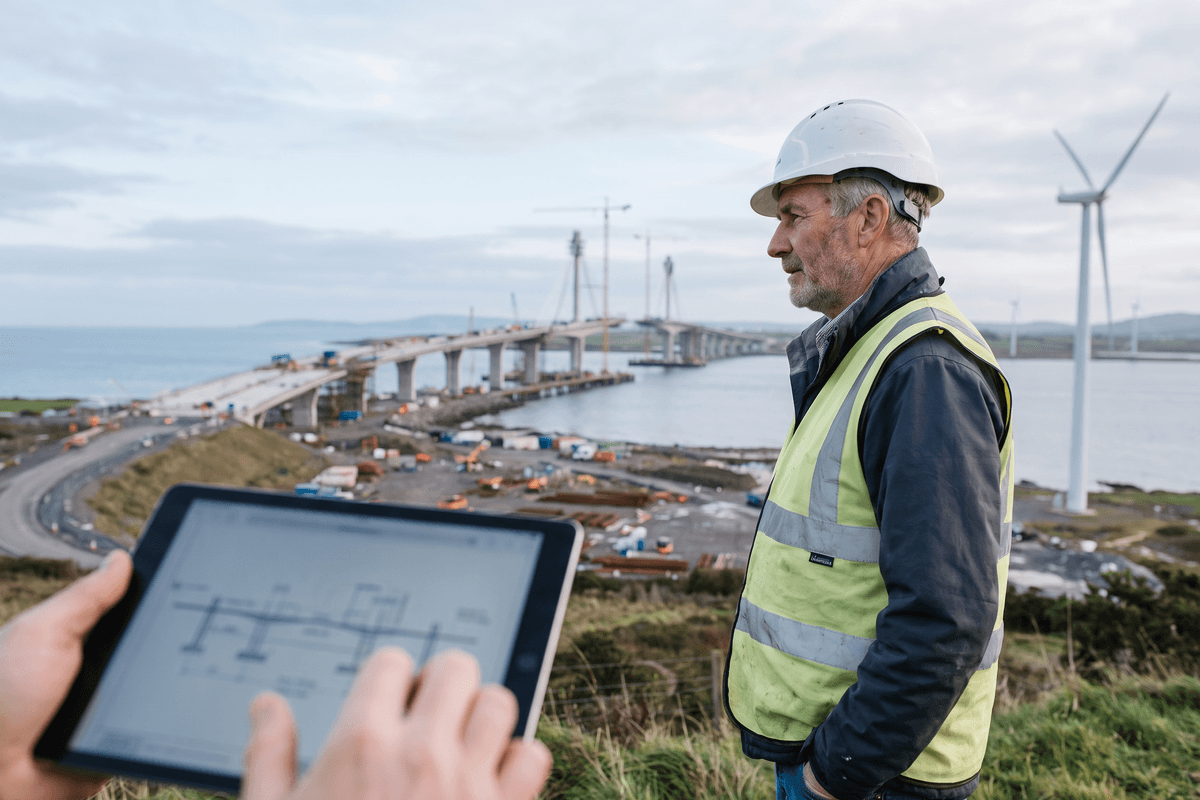



For Irish engineering professionals, the modern mandate has never been more complex: we are tasked with raising ambitious new civic landmarks while simultaneously defending our existing infrastructure against the increasingly volatile ground beneath it. As we move deeper into 2026, the intersection of urban regeneration, climate adaptation, and advanced research is fundamentally rewriting the rulebook for how we design, build, and maintain the built environment.
Civic Renaissance: The Parnell Square Catalyst
The physical transformation of Ireland's capital took a significant step forward this month. In a move that signals a renewed commitment to major urban infrastructure, Dublin City Council has officially appointed Purcell Construction Limited as the main contractor for Phase 1 of the Parnell Square Cultural Quarter project. At the heart of this phase is the long-awaited delivery of the new City Library—a project that is as much an engineering feat as it is a cultural milestone.
For the civil and structural engineers involved, the Parnell Square project represents the pinnacle of modern urban integration. It requires the delicate marrying of deep-retrofit heritage preservation with cutting-edge, sustainable new builds in a highly congested urban footprint. Purcell Construction’s appointment moves this project from the theoretical planning stages into hard, physical execution, providing a vital pipeline of work and a proving ground for modern construction methodologies in Ireland.
"The Parnell Square Cultural Quarter is not just a building; it is a complex civic intervention. It demands a level of engineering precision and stakeholder management that will set the standard for future urban regeneration projects across the island."
However, the successful delivery of such megaprojects relies heavily on a foundational assumption that is increasingly coming under threat: the stability of the ground itself.
The Ground Beneath Our Feet: Climate and Geotechnical Risk
While we look upward at new civic structures, geotechnical engineers are looking downward with growing concern. The realities of climate change are no longer distant theoretical models; they are actively altering the physical properties of Irish soil.
Specialist ground engineering firm Mainmark Ireland recently issued a stark warning to infrastructure owners across the country. According to their latest assessments, climate change is significantly heightening ground-condition risks, particularly concerning subsidence and soil destabilization caused by extreme weather patterns. Prolonged periods of intense rainfall followed by unseasonal droughts are causing rapid expansion and contraction in cohesive soils, putting immense stress on both legacy foundations and new infrastructure.
The Shifting Baseline of Infrastructure Design
For civil and structural engineers, this means historical geotechnical data is becoming less reliable as a baseline for future performance. We are moving from a static understanding of ground conditions to a dynamic, climate-impacted model.
| Geotechnical Factor | Traditional Assumption | Climate-Impacted Reality (2026) |
|---|---|---|
| Soil Moisture | Predictable seasonal variations. | Extreme saturation followed by rapid drying, causing severe volume changes. |
| Water Tables | Relatively stable, mapped historical highs. | Flash flooding and altered drainage leading to localized, unpredictable hydrostatic pressure. |
| Subsidence Risk | Localized to specific, known geological fault zones. | Widespread risk across previously stable zones due to soil desiccation and washout. |
Mainmark’s warning is a clarion call for the industry to adopt proactive, non-disruptive ground engineering solutions—such as advanced geopolymer injections—before catastrophic failures occur. It also underscores the urgent need for a more resilient approach to material science and infrastructure design.
Engineering the Climate Solution: The R&D Response
Recognizing that we cannot simply build our way out of climate risks using 20th-century materials, the Irish engineering sector is heavily backing applied research. We are seeing a distinct pivot toward deep tech and advanced material science to secure the built environment.
A prime example of this is the newly announced collaboration between Kingspan and Innovate for Ireland. The two entities have teamed up on a €3 million PhD funding deal specifically targeted at tackling industry challenges in climate action and the built environment. This is not abstract academic research; it is highly targeted, industry-led R&D designed to yield commercial engineering solutions.
The Kingspan initiative will focus on several critical pathways for the engineering sector:
- Advanced Thermal Efficiency: Developing next-generation insulation materials that require smaller footprints while delivering higher performance.
- Embodied Carbon Reduction: Engineering construction materials that actively sequester carbon or drastically reduce emissions during the manufacturing process.
- Climate-Resilient Envelopes: Designing building facades and structures that can withstand the extreme weather events highlighted by geotechnical experts.
By injecting €3 million into PhD-level research, Kingspan is effectively securing Ireland’s talent pipeline, ensuring that the engineers designing the infrastructure of 2035 have the deep-tech expertise required to navigate a volatile climate.
Digital Enablers and Frontier Energy: Powering the Transition
Managing the symbiosis between complex physical infrastructure, unpredictable climate variables, and advanced new materials requires immense computational power and seamless digital integration. The physical built environment is becoming entirely reliant on its digital twin.
This reality is driving significant job creation in the digital engineering space. Dublin-based digital services company TEKenable has just unveiled a new partnership programme that will create 30 specialized jobs in software engineering, project management, and business analysis. These roles are critical for developing the software architectures that monitor infrastructure health, manage smart city grids, and optimize the delivery of megaprojects like the Parnell Square Cultural Quarter.
Looking to the Ultimate Horizon: Fusion
Finally, as we engineer smarter, more resilient cities, the question of how to power them sustainably remains paramount. While wind and solar dominate the current Irish narrative, the engineering community is already looking toward the ultimate frontier of clean baseload power.
Recently, a delegation from Engineers Ireland visited the UK Atomic Energy Authority to examine growing opportunities in fusion energy. While commercial fusion may still be on the horizon, the engineering supply chain—encompassing cryogenics, advanced materials, and high-precision manufacturing—is being built today. By positioning Irish engineers at the forefront of fusion research, the industry is ensuring it has a seat at the table when the next generation of global energy infrastructure is deployed.
Conclusion: A Holistic Engineering Mandate
The narrative of Irish engineering in 2026 is one of profound interconnectedness. The successful delivery of cultural touchstones like the Parnell Square City Library relies on our ability to mitigate the geotechnical risks warned of by Mainmark. Overcoming those risks requires the advanced material science funded by Kingspan, which in turn must be managed by the software engineers at firms like TEKenable and eventually powered by frontier technologies like fusion.
For professionals in the field, the takeaway is clear: siloed expertise is no longer sufficient. The engineers who will lead Ireland’s built environment into the next decade are those who can bridge the gap between heavy civil construction, climate science, and digital innovation. As the ground shifts beneath us—both literally and metaphorically—our capacity to adapt and innovate remains our strongest foundation.