
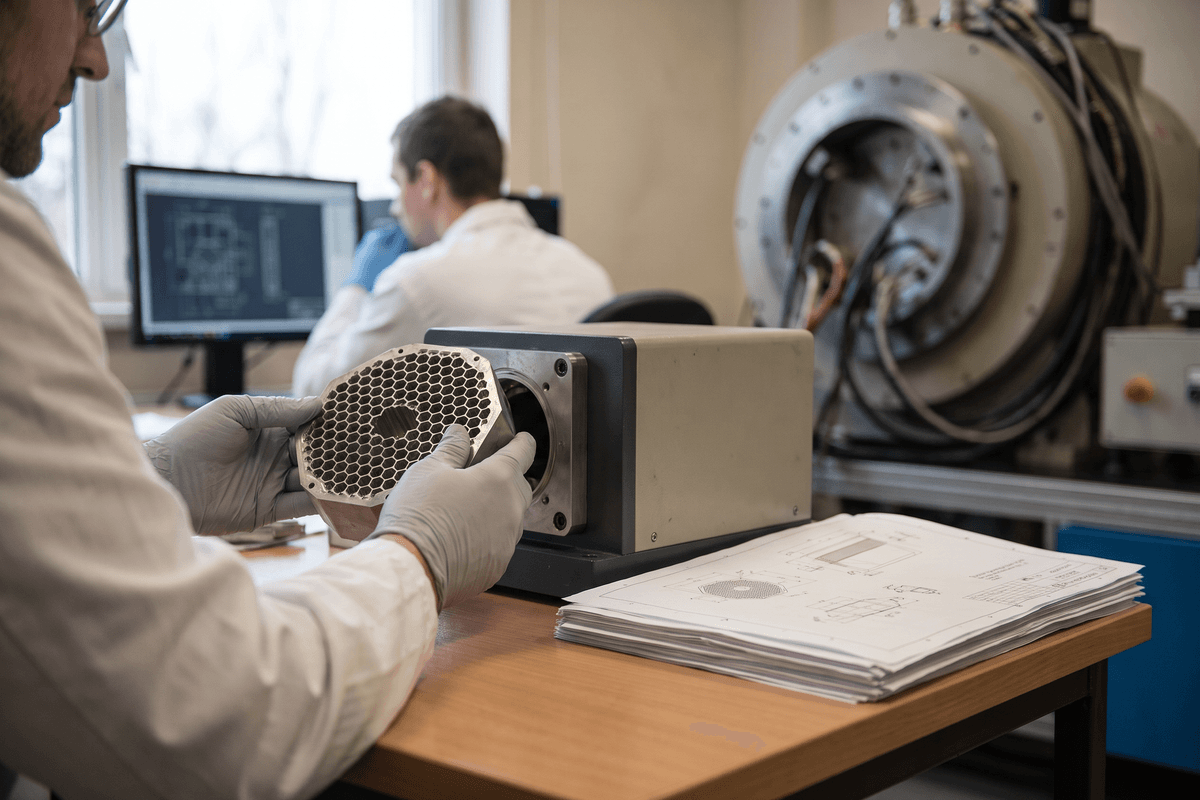



For decades, the narrative surrounding the Irish engineering sector was heavily anchored in its ability to attract and support Foreign Direct Investment (FDI). While that remains a cornerstone of the economy, a profound shift is underway in 2026. Today, the island of Ireland is increasingly recognized not just as a reliable base for global tech and pharma giants, but as a primary exporter of deep-tech solutions, precision manufacturing, and next-generation energy research. From the laboratories of Belfast to the particle accelerators of Geneva, Irish engineers are actively designing the infrastructure of tomorrow.
The R&D Frontier: 3D Printing the Net-Zero Transition
As Ireland and the broader global community race toward ambitious net-zero targets, the intermittency of renewable energy sources—such as wind and solar—remains a critical bottleneck. Storing excess energy for when the wind doesn't blow or the sun doesn't shine requires grid-scale battery solutions that go beyond the limitations of traditional lithium-ion technology.
Enter a groundbreaking development from Northern Ireland. Researchers at Queen's University Belfast (QUB) have successfully developed an innovative 3D-printed battery designed specifically to tackle this global climate challenge. The QUB duo has focused their efforts on flow batteries, a technology long recognized for its potential in large-scale energy storage, but traditionally hampered by complex manufacturing processes and high costs.
"By leveraging advanced 3D printing techniques, the researchers at Queen's University Belfast have found a way to standardize the production of flow batteries, drastically reducing both the time and cost required to manufacture these critical grid components."
Why Flow Batteries Matter for Ireland's Grid
Unlike standard solid-state batteries, flow batteries store energy in liquid electrolytes contained in external tanks. This allows for scalable energy storage simply by increasing the size of the tanks. The QUB breakthrough utilizes 3D printing to create the complex internal geometries of the battery cells with extreme precision, optimizing fluid dynamics and electrical efficiency.
For engineering professionals working in Ireland's renewable sector, this represents a massive leap forward. Here is how next-generation flow batteries compare to traditional grid storage:
| Feature | Traditional Lithium-Ion | 3D-Printed Flow Batteries (QUB Model) |
|---|---|---|
| Scalability | Requires adding entire new battery units (expensive). | Requires only larger electrolyte tanks (cost-effective). |
| Lifespan | Degrades over time (typically 10-15 years). | Minimal degradation; can last 20-30+ years. |
| Manufacturing | Resource-intensive, relies on scarce metals. | Standardized, rapid prototyping via 3D printing. |
| Best Use Case | Short-duration, high-power bursts (EVs, frequency response). | Long-duration, grid-scale load shifting (wind/solar backup). |
Precision on the Global Stage: From Limerick to CERN
While QUB is redefining energy storage, indigenous Irish manufacturing is proving its mettle on the most demanding scientific stage in the world. Precision engineering company EFJ recently secured a highly coveted opportunity to work with CERN, the European Organization for Nuclear Research.
Operating the Large Hadron Collider requires engineering tolerances that border on the absolute limits of material science. The fact that an Irish firm has been tapped for this work is a testament to the advanced machining, quality assurance, and metallurgical expertise currently residing within the Irish SME sector.
The Power of the Local Ecosystem
Crucially, this international breakthrough was catalyzed locally. The introduction between EFJ and CERN representatives took place at the Manufacturing Solutions Ireland event in Limerick. In an era dominated by digital procurement and remote networking, this success story underscores a vital lesson for Irish engineering firms:
- Face-to-Face Engagement Remains Vital: Complex, high-stakes engineering contracts are still built on trust, which is most effectively established through direct, in-person technical demonstrations.
- Regional Hubs Drive Global Reach: Limerick's emergence as a manufacturing and engineering hub provides the necessary gravity to attract international heavyweights like CERN to Irish shores.
- SMEs Can Compete Globally: Irish precision engineering is no longer just a supply chain for local med-tech; it is capable of servicing fundamental global scientific research.
The Next Generation of Power: Exploring Fusion Energy
The ambition of the Irish engineering sector extends even further down the energy horizon. While 3D-printed flow batteries solve the immediate need for renewable storage, fusion energy remains the "holy grail" of limitless, clean power. Recognizing this, a recent Engineers Ireland delegation visited the UK Atomic Energy Authority (UKAEA) to explore emerging opportunities for Irish professionals in the fusion sector.
This proactive engagement is highly strategic. Commercial fusion energy will require an unprecedented mobilization of structural, electrical, and materials engineering. By embedding Irish engineers, researchers, and supply chain companies into large-scale international research initiatives like those at the UKAEA now, Ireland is positioning itself to be a net exporter of fusion-related engineering services when the technology eventually commercializes.
The Domestic Dividend: Scaling the Energy Transition at Home
While CERN contracts and fusion research highlight Ireland's deep-tech capabilities, the transition to a green economy is also driving massive, immediate job creation on the ground. High-level R&D must ultimately translate into practical deployment in the built environment.
This reality is perfectly illustrated by SE Systems, Ireland's largest independent provider of energy solutions. The company recently announced expansion plans that will create up to 150 new jobs over the next two years. Driven by soaring consumer and commercial demand for solar installations and deep energy retrofits, this expansion highlights the robust health of Ireland's domestic green engineering sector.
What This Means for the Workforce
The rapid expansion of firms like SE Systems dictates a clear mandate for the Irish engineering workforce:
- Upskilling in Retrofit Technologies: Civil and structural engineers must become intimately familiar with deep-retrofit methodologies, thermal bridging, and sustainable materials.
- System Integration: Electrical engineers are seeing a massive shift toward micro-generation. Integrating residential solar arrays with domestic battery storage and the national grid is now a baseline requirement.
- Project Management: Scaling up to handle thousands of concurrent national retrofit projects requires robust, tech-enabled project management frameworks to ensure quality and compliance at scale.
Conclusion: A Multi-Tiered Engineering Economy
The current landscape of Irish engineering is uniquely dynamic. It is a multi-tiered ecosystem where groundbreaking academic research (like QUB's 3D-printed batteries) feeds into global scientific endeavors (EFJ at CERN), while simultaneously preparing for future energy paradigms (fusion research), all underpinned by a booming domestic market for green infrastructure (SE Systems).
For engineering professionals, the message is clear: the boundaries of what can be achieved from an Irish base have never been wider. Whether your expertise lies in the microscopic tolerances of particle physics, the fluid dynamics of grid-scale storage, or the logistical scaling of national solar rollouts, Ireland's engineering sector is not just participating in the global technological transition—it is actively leading it.